Gear
Mats for home BJJ training
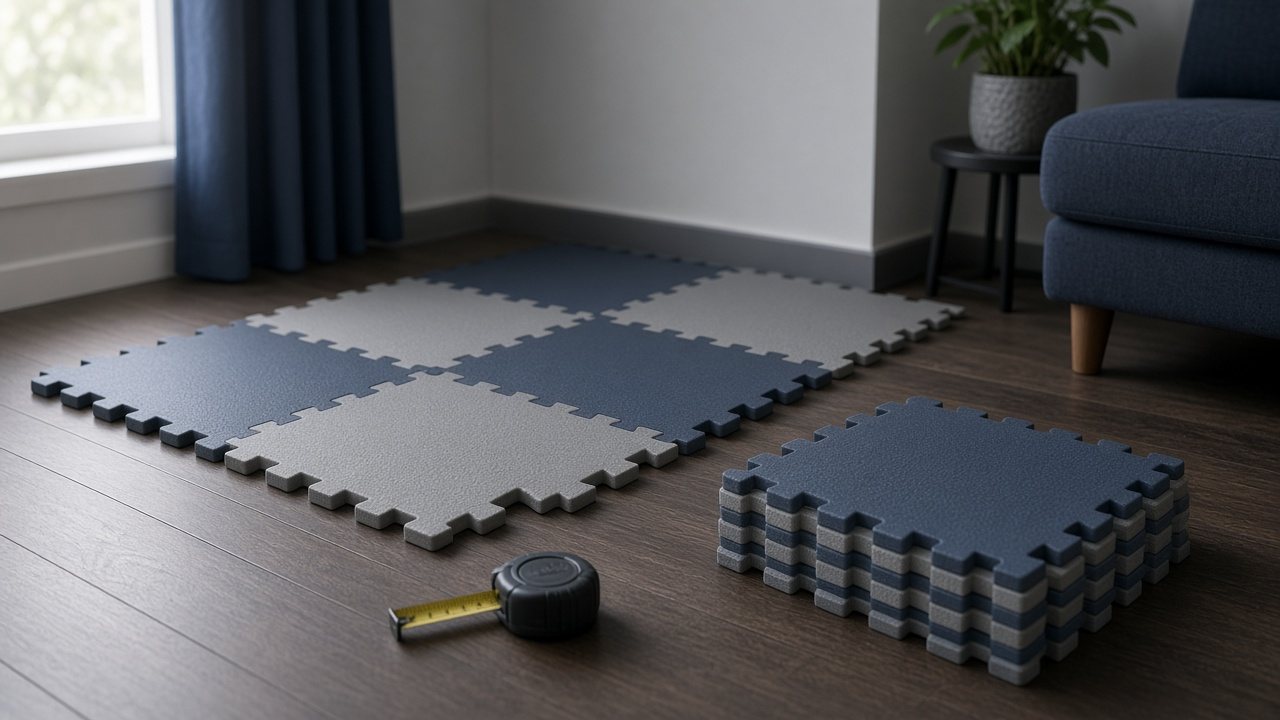
Image: generated for this site with AI; it does not show a real product, brand, or person.
A mat turns a spare room or garage into a place you can drill. For most beginners, the realistic goal is a soft, grippy surface for ground movement and solo drills — not a full academy floor. Whatever you choose, practicing throws and falls is a coached activity; ask your instructor what a surface needs before you try them.
This page compares product types using details published on seller listings. This site has not tested any mat, and it does not certify any mat as safe for throws. When a listing says it is suitable for throws, that is the seller’s statement.
Some links on this page go to example products on Amazon. As an Amazon Associate I earn from qualifying purchases. These are examples drawn from seller listings, not reviews, and not a claim that any product is best. Check the seller’s current size, price, and return policy before you buy.
Common types
| Type | What it is | Good to know |
|---|---|---|
| EVA exercise tiles | Interlocking foam “puzzle” squares, often 1 inch thick. | Easy to store and expand. Marketed for exercise and play areas, not specifically for grappling. |
| Tatami-textured tiles | Interlocking tiles with a woven-look surface, sold for martial arts. | Sellers describe the surface as designed for traction. Thickness varies by product, so read the listing. |
| Roll-out tatami | A single foam mat you unroll. | Fewer seams than tiles, so fewer places for a gap. Bulkier to store. |
Do the floor math first
Measure the room before you shop. A 24″ × 24″ tile covers 4 square feet. A 20″ × 20″ tile covers about 2.8 square feet. So a 10 ft × 10 ft area is 100 square feet, which needs 25 of the 24″ tiles or roughly 36 of the 20″ tiles, plus border pieces if you want clean edges. Leave space around the mat: walls, furniture, and doors are hazards when you roll or shrimp.
- Hard, flat floor under it. Tiles and mats grip better and last longer on a flat, solid floor. On carpet, mats may shift.
- Gaps and edges. Interlocking tiles can separate while you train. Check the seams often.
- Smell and cleaning. Mats collect sweat. One state high-school athletic association’s wrestling guidance says to clean mats with a disinfectant cleaner daily, preferably within an hour of practice. Check your mat maker’s instructions for what is safe on that material.
Examples from current listings
Dimensions below come from each listing. This site makes no claim about how any of them performs.
Gold BJJ Home Jiu Jitsu Mats, 1.5″ interlocking tiles
The listing describes a set of 12 reversible 20″ × 20″ tiles covering 33.3 square feet, with a tatami-style surface, sold for grappling and judo.
View on AmazonIncStores 7/8″ Tatami Foam Flooring Tiles
The listing describes 7/8″ closed-cell EVA foam tiles with a tatami texture, 2′ × 2′ each, in two reversible colorways, sold for martial-arts floors.
View on AmazonGreat Call Athletics 10×10 ft Ready Roll tatami mat, 1.25″
The listing describes a roll-out 10 ft × 10 ft black mat of 1.25″ foam, sold for BJJ, judo, and wrestling. One piece, so fewer seams than tiles.
View on AmazonBalanceFrom 1-inch EVA puzzle exercise mat
An exercise mat, not a grappling mat: the listing describes 24″ × 24″ × 1″ tiles, 18 per set, plus end borders, covering 72 square feet. Listed for gyms and play areas. A budget way to cover floor for solo drills such as shrimps and bridges.
View on AmazonA sensible way to start
If you are not sure how much you will train at home, start with a small zone of tiles big enough for solo drills (about 6 ft × 6 ft to 8 ft × 8 ft) and add tiles later. Interlocking tiles let you grow. Before you buy a heavier mat sold for throws, talk to your coach about what you actually plan to do on it.
Sources
- Iowa High School Athletic Association — Guidelines to reduce communicable skin conditions in wrestling. Cleaning wrestling mats daily with a disinfectant, preferably within an hour of practice.
- CDC — MRSA prevention and control for athletes. Hygiene, washing and drying uniforms, not sharing personal items, covering cuts.